The Frost-to-Frost Method · Zones 3–10
Spring in Georgia comes two months before spring in Minnesota. Your planting calendar should know that.
The Homegrown Almanac is built on one idea: your garden year runs frost to frost, not January to December. Pick your zone and it turns those two dates into a week-by-week plan: when to start seeds indoors, when to plant outside, and when to pick.
- A Backyard Plan for your zone: the calendar, week by week
- 20 illustrated chapters, from the first bed to a full pantry
- Checked against USDA and university Extension sources
- 30-day money-back guarantee
- One-time payment
- Secure checkout
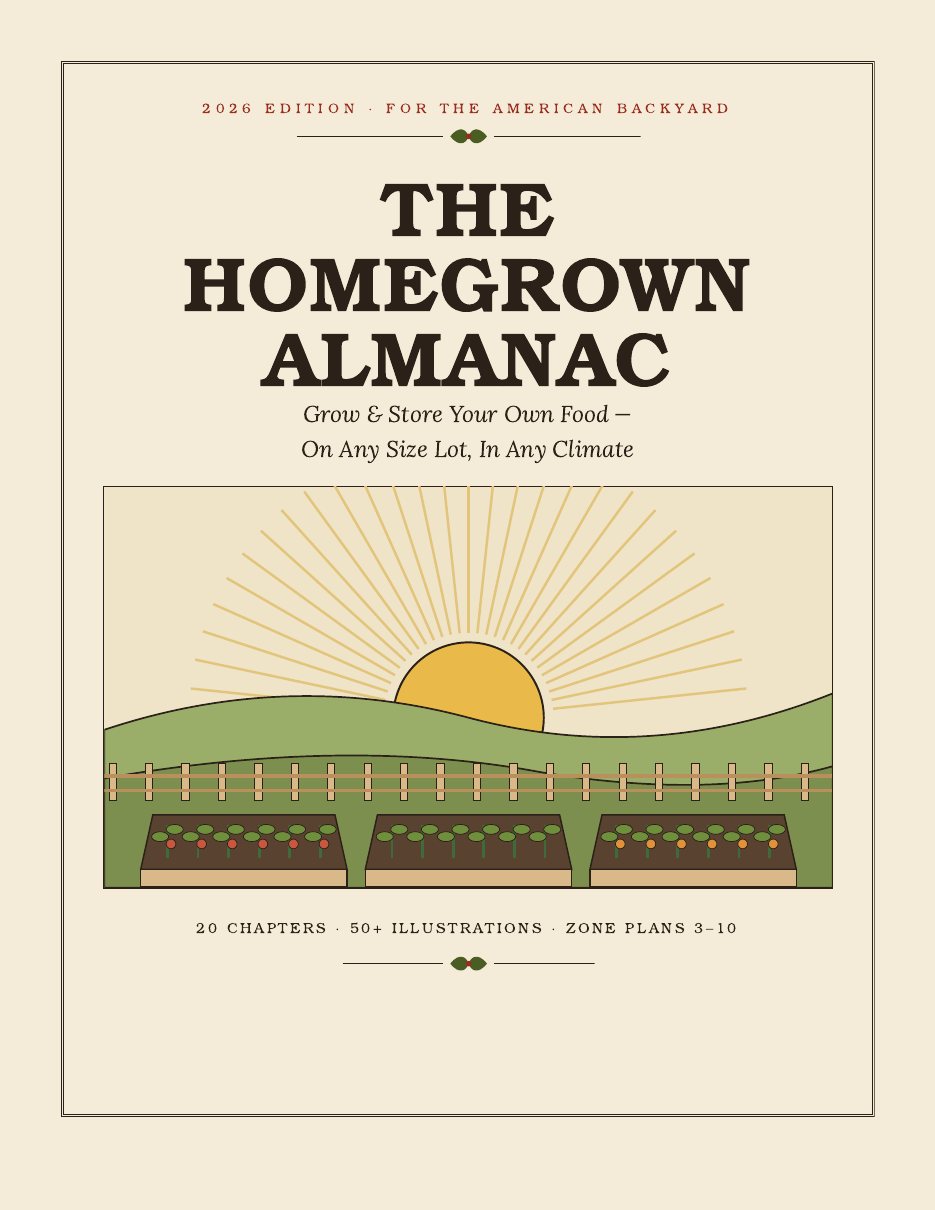
Sound familiar?
You’d love to grow more of your own food. But…
- Every trip to the grocery store seems to cost a little more than the last.
- You’ve tried a tomato plant or two — and got more leaves than tomatoes.
- The advice online contradicts itself, and none of it seems to fit where you live.
- You don’t have acres, a tractor, or a back that wants to dig all weekend.
That’s exactly who this almanac was written for.
Why it never quite worked
You didn’t fail at gardening. You were following someone else’s calendar.
Nearly every garden book, magazine and video is written for a whole country. But a country doesn’t have one spring. Spring reaches Georgia in February and Minnesota in May — and a tomato seedling doesn’t care what month the book says. It cares whether the frost is finished where it is standing.
So the seed packet tells you to plant after your last frost. That is a sentence, not a date. You were handed the right advice on the wrong week, season after season, and told the problem was your soil, your sun, or your thumb.
Your garden year doesn’t run January to December.
It runs frost to frost.
The method
The Frost-to-Frost Method
Start with your two dates
Pick your USDA zone, 3 through 10. That gives you the week your last spring frost usually ends, the week your first fall frost usually arrives, and the frost-free days between them.
Three dates for every crop
For twenty crops: the week to start seeds indoors, the week to plant outside, and the week to begin picking — counted from your frost dates, not a calendar printed for the whole country.
A year you can follow
Those dates become a month-by-month checklist, a bed plan for three seasons, and a page you can pin to the shed wall. No guesswork left to do in April.
Frost dates can differ by several weeks inside a single zone, and a late spring moves everything. Your plan shows you how to slide the whole calendar to match your own local dates.
Real backyards, real food
What a home garden can grow
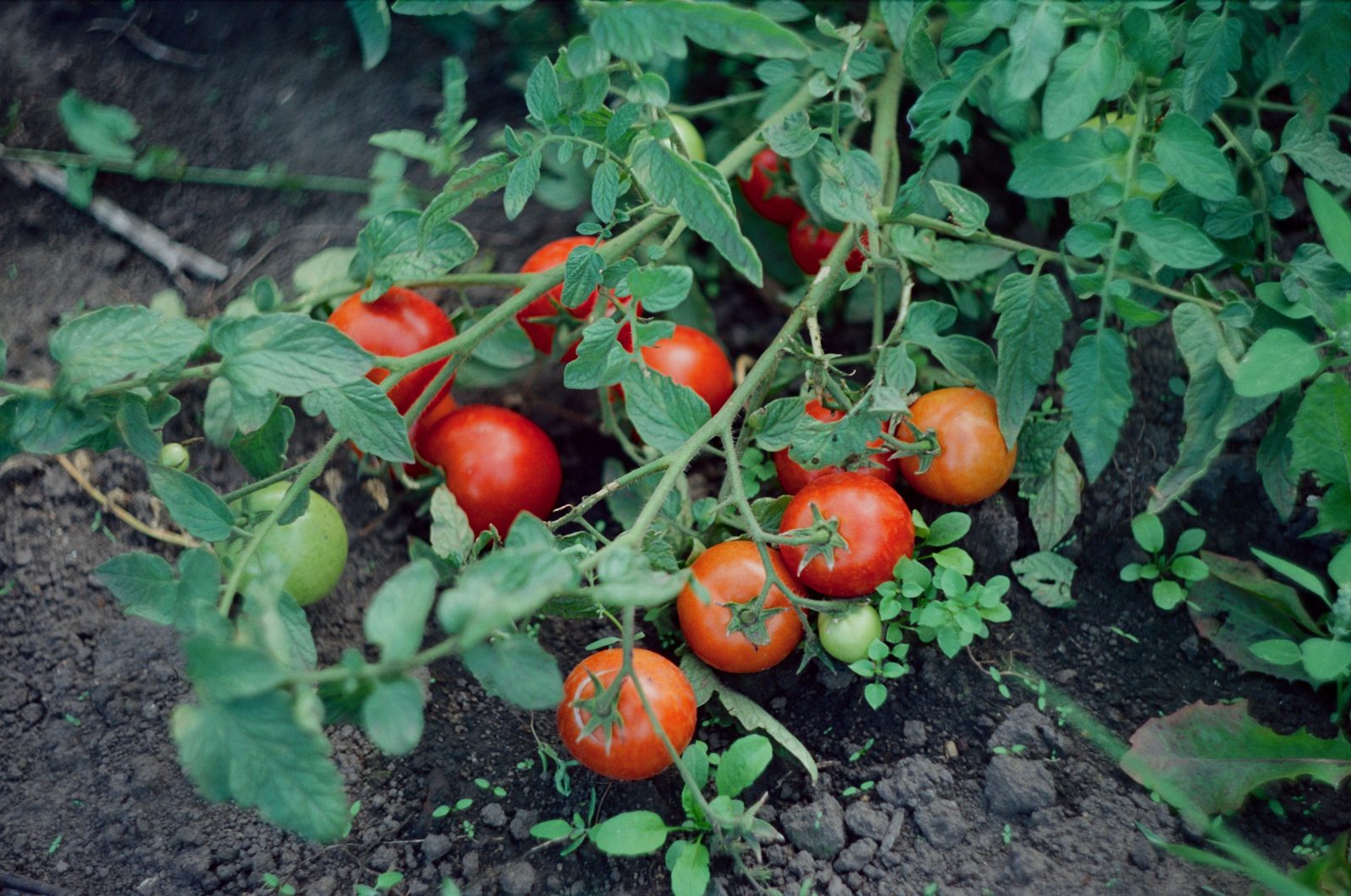
Not a farm. Not acres. Just a few beds, some pots, maybe a couple of hens — and the kind of food you can’t buy at any store.
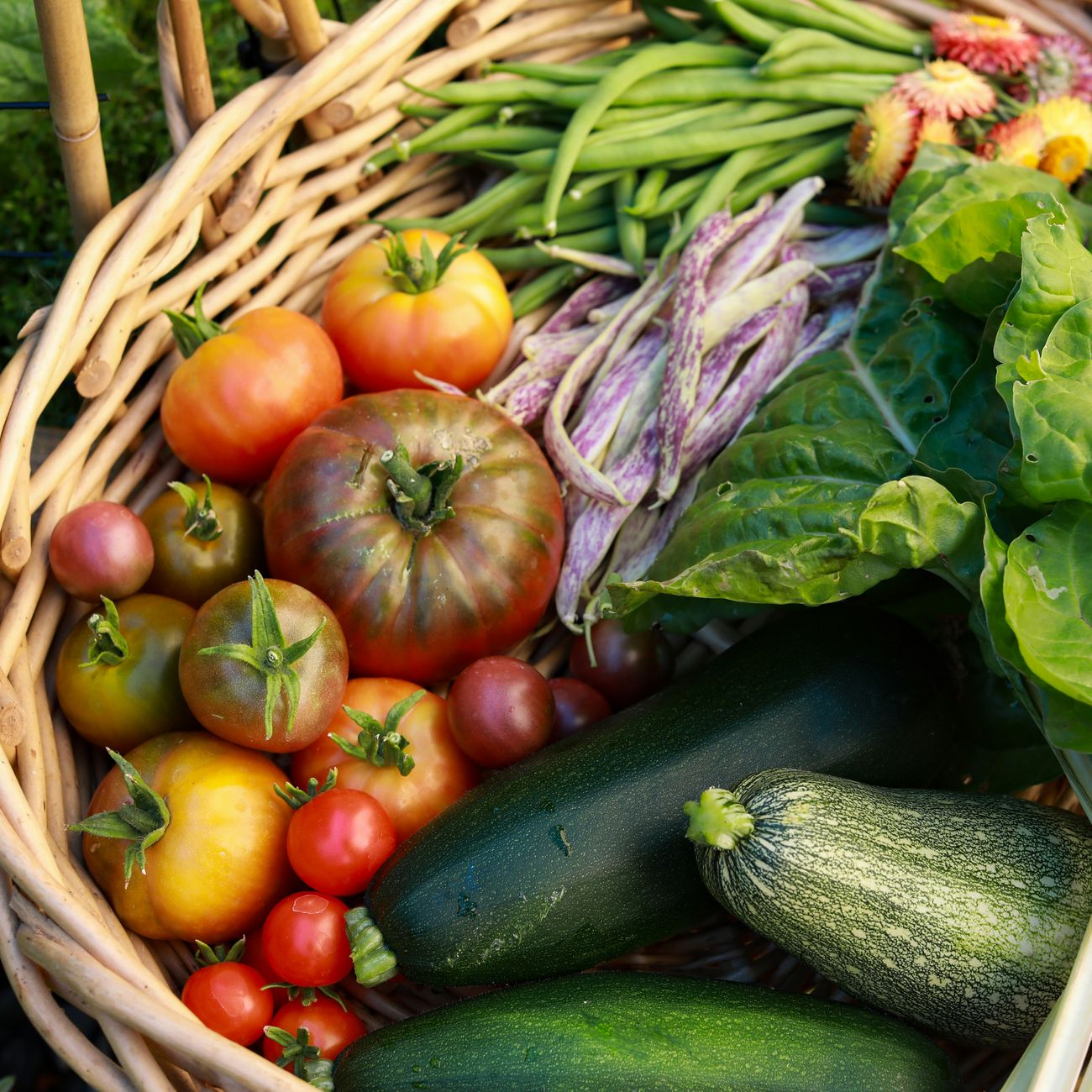
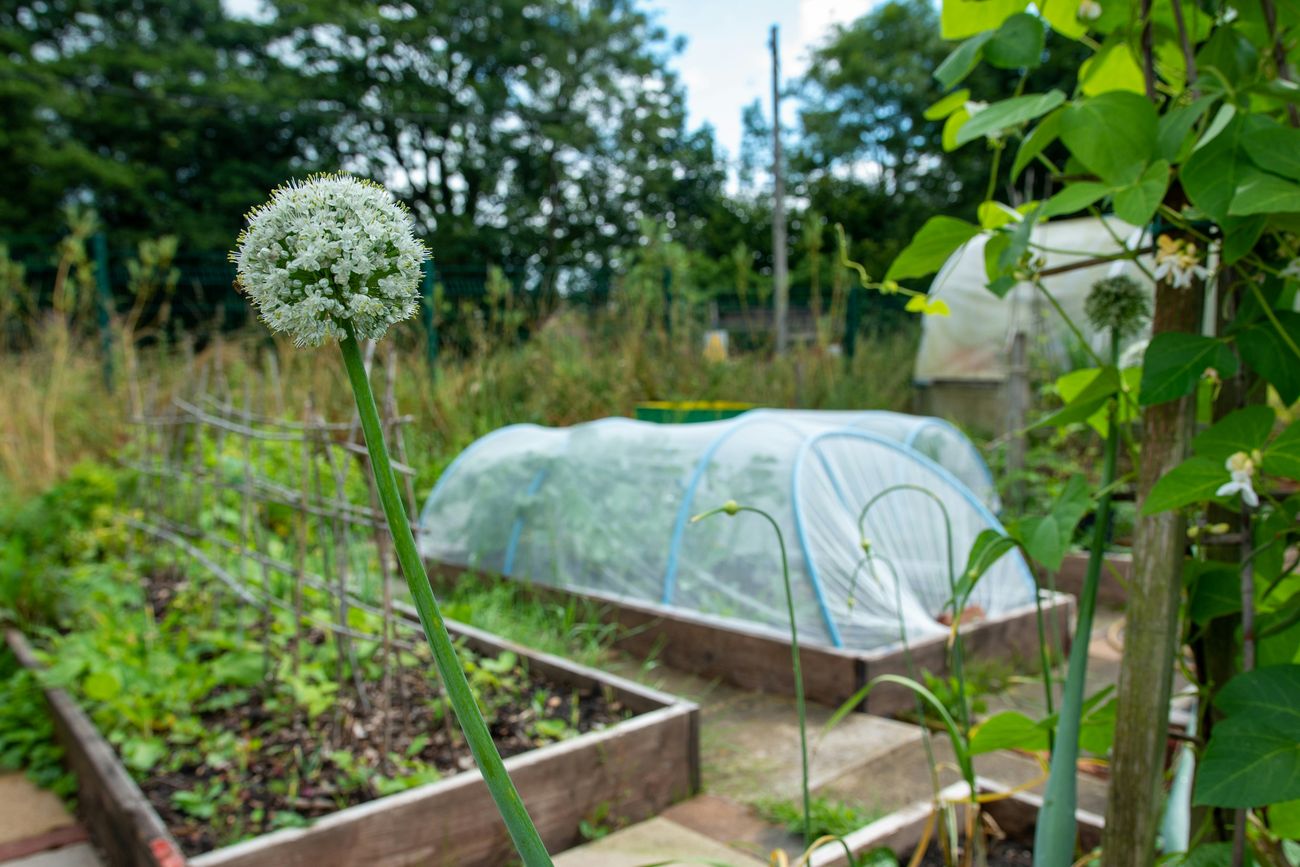
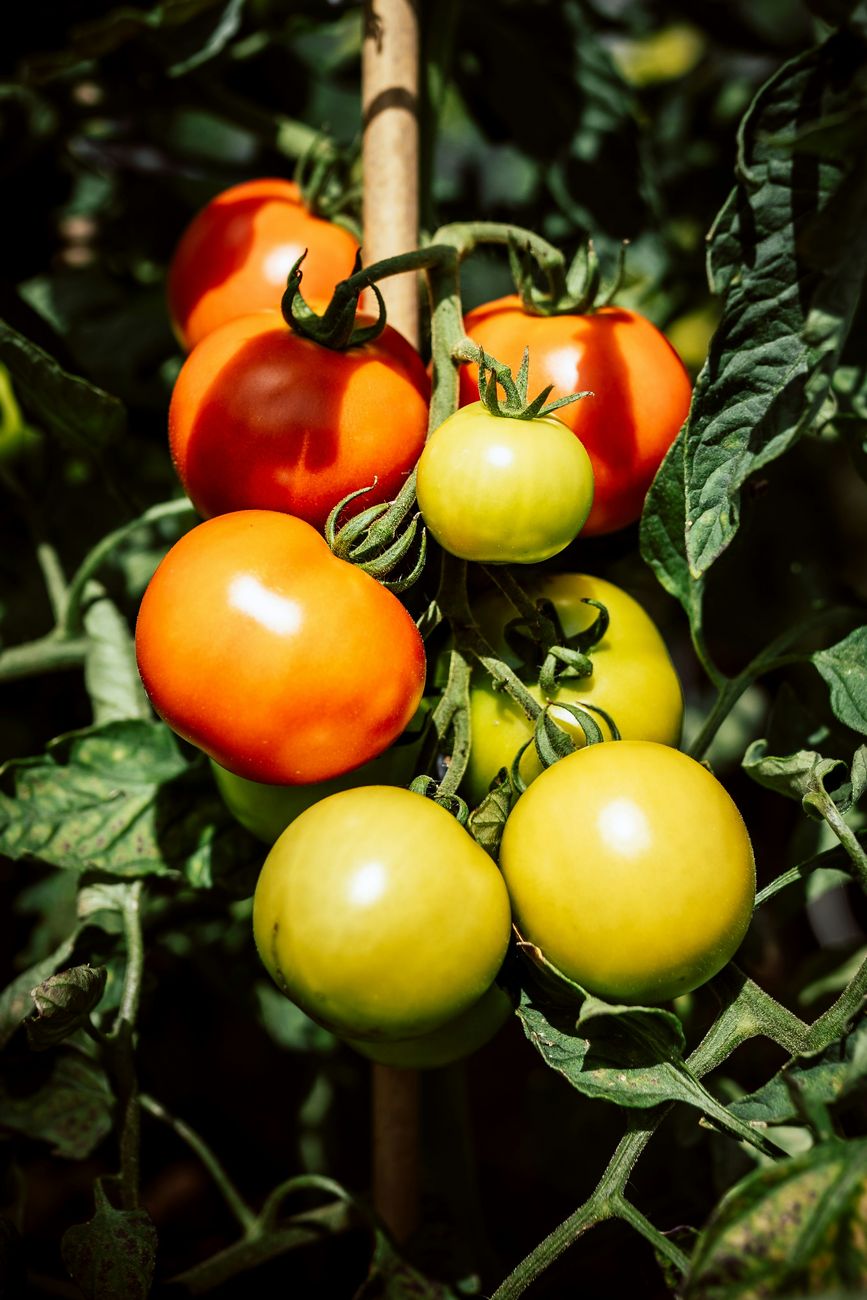
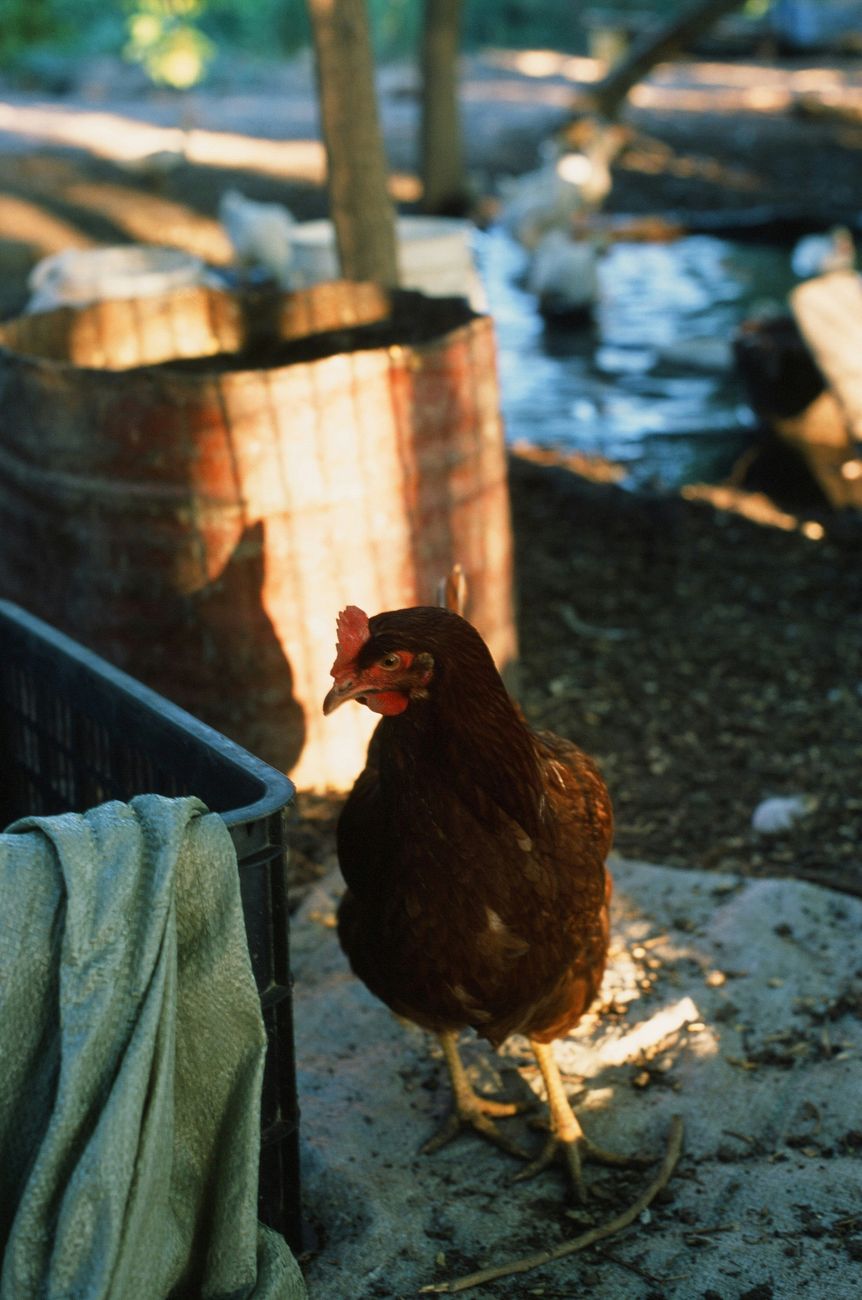
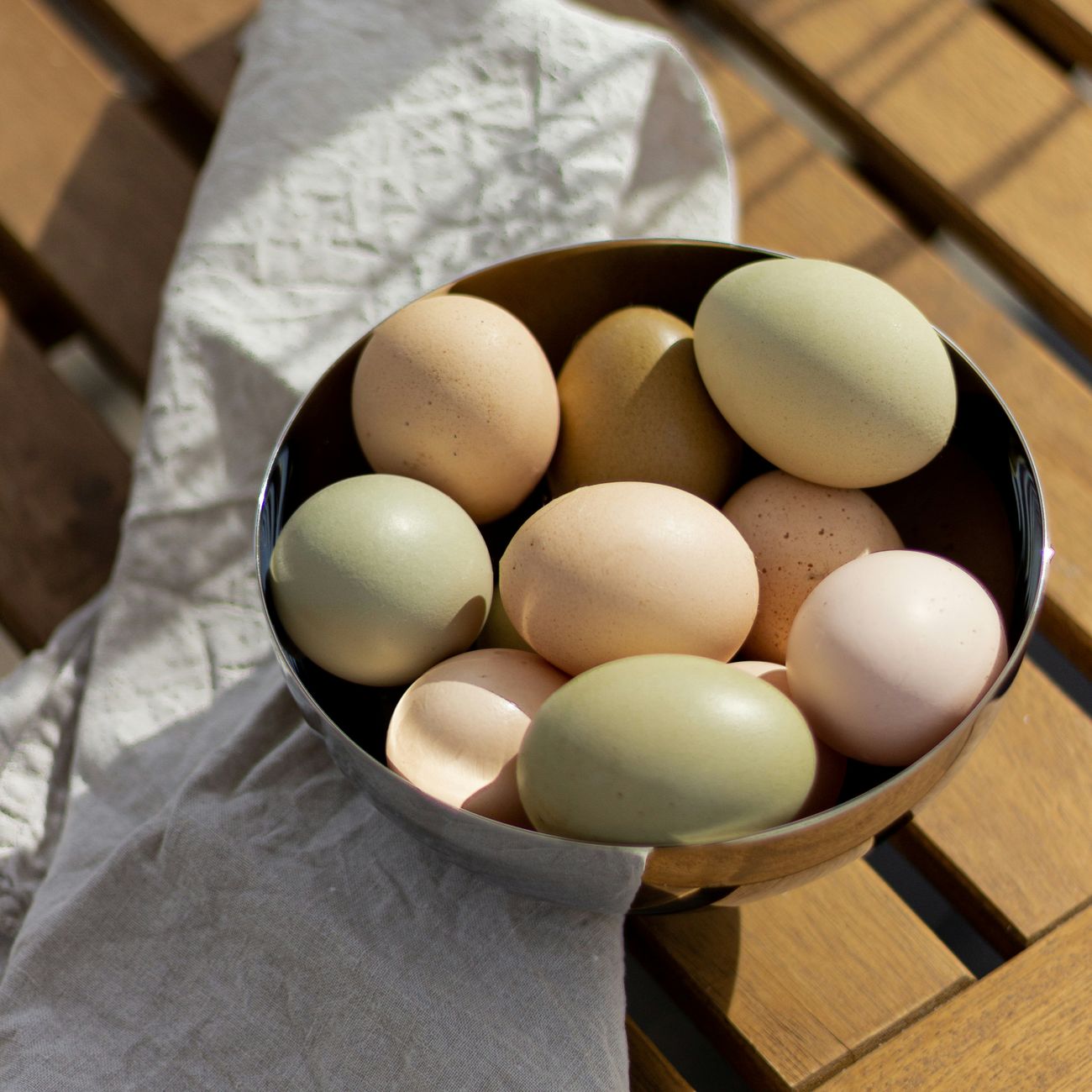
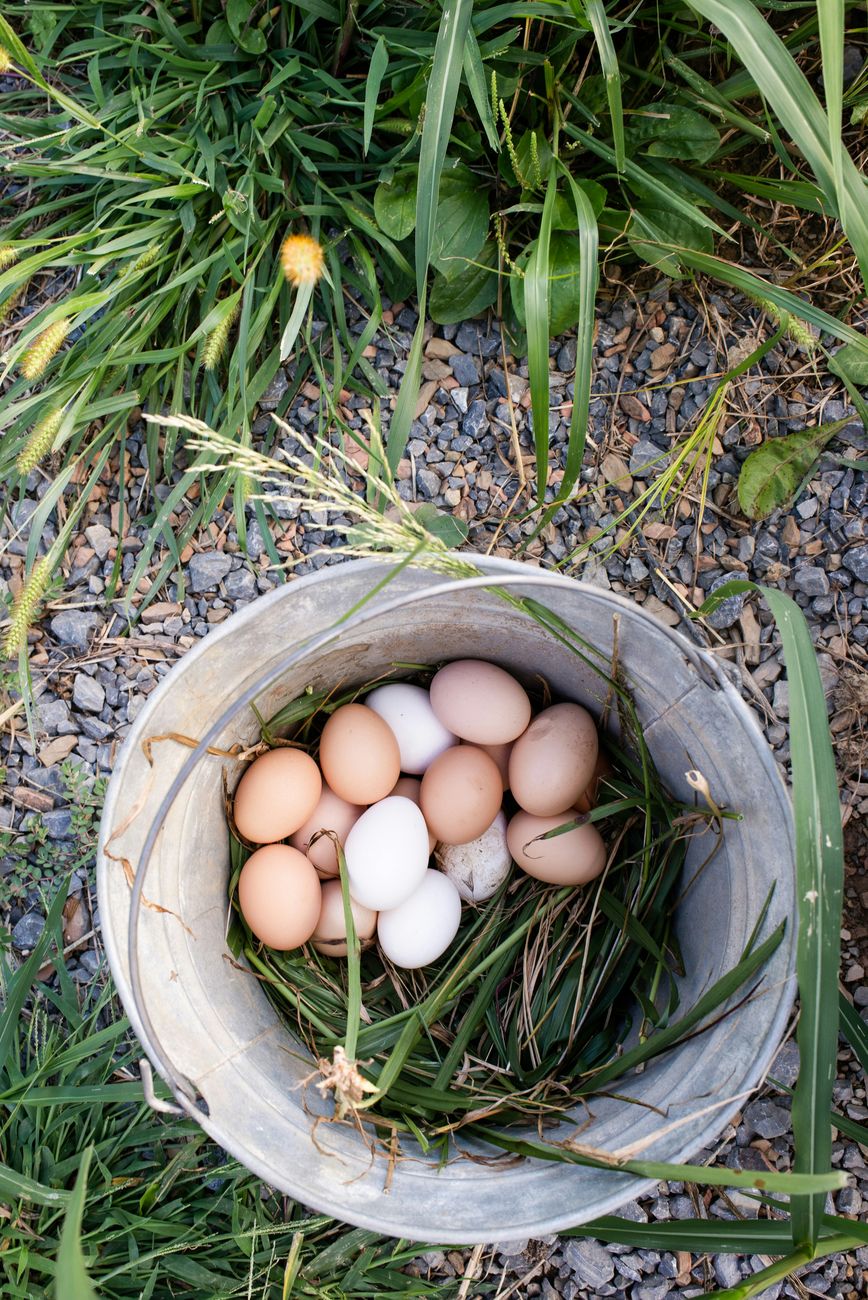


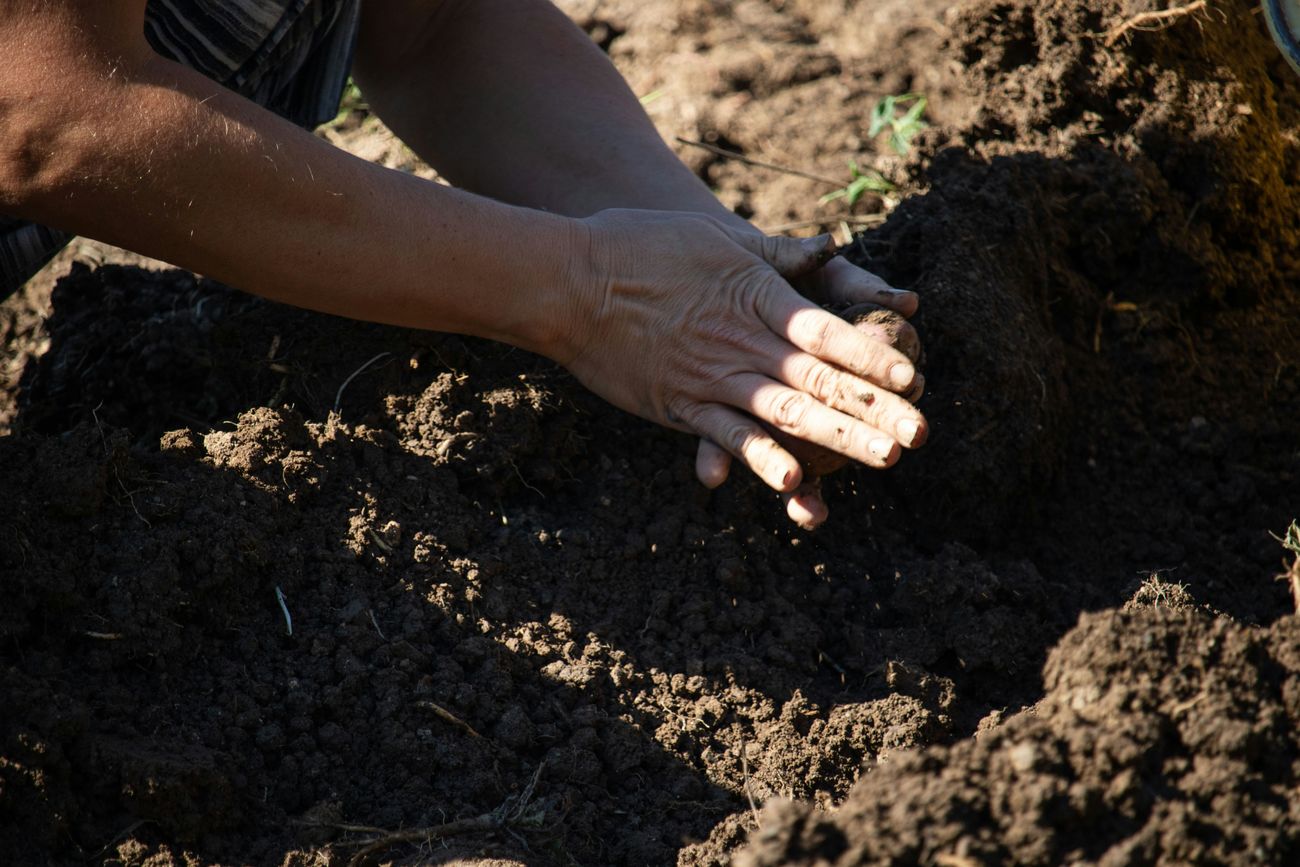
Photos show typical home gardens. They are illustrations, not results from specific readers. Your harvest depends on your climate, space, and care.
What makes it different
An old-fashioned almanac, made for today’s backyard
Built frost to frost
Not a national calendar with your state stapled on. Your Backyard Plan is counted outward from your own two frost dates.
Shown, not just told
Diagrams, cut lists, planting grids, and crop cards on nearly every page. If you can follow a recipe, you can follow this.
Made for real yards
A single raised bed, a patio of containers, or a straw-bale garden on poor soil. No tiller, no acreage, no special skills.
Try it now
What’s your growing zone?
Tap your zone to see a taste of your Backyard Plan.
USDA zone
- Start tomato seeds indoorsaround
- Sow peas outdoorsaround
- Set out tomato plantsaround
- Plant garlic for next summeraround
Typical dates for Zone . Frost dates can vary by a few weeks inside one zone, so your plan shows you how to slide the whole calendar to match your own local dates. Don’t know your zone? Look it up free on the USDA Plant Hardiness Zone Map.
Look inside
20 chapters in five parts
Plan
How much food fits in your space, reading your climate and sun, knowing your soil, and three garden layouts.
Grow
Build a 4×8 raised bed step by step, containers and vertical growing, straw bales, compost, seeds, and 25 crop cards.
Tend
Good neighbors and crop rotation, easy watering, and pests handled without poison.
Extend
More months of harvest, perennial crops you plant once, and catching rainwater.
Keep
Storing the harvest, freezing, drying and canning safely, your garden year, and your record pages.
Your Backyard Plan
A 4-page plan for your zone (3 to 10): planting calendar, monthly checklist, 3-season bed plan, and shopping list.
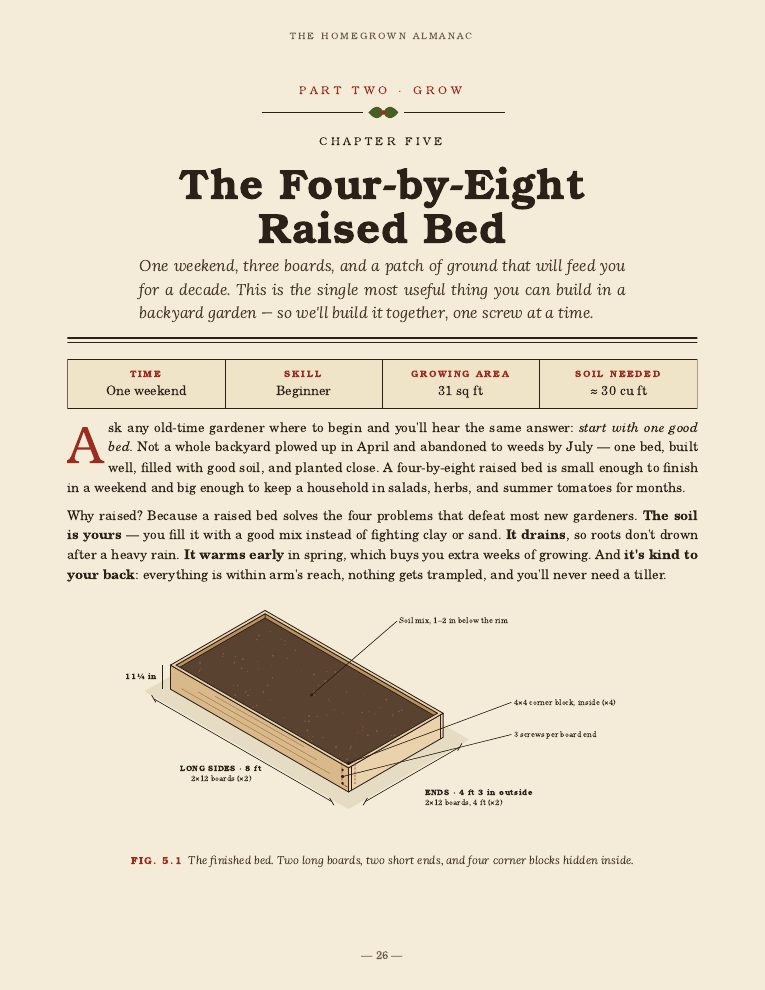
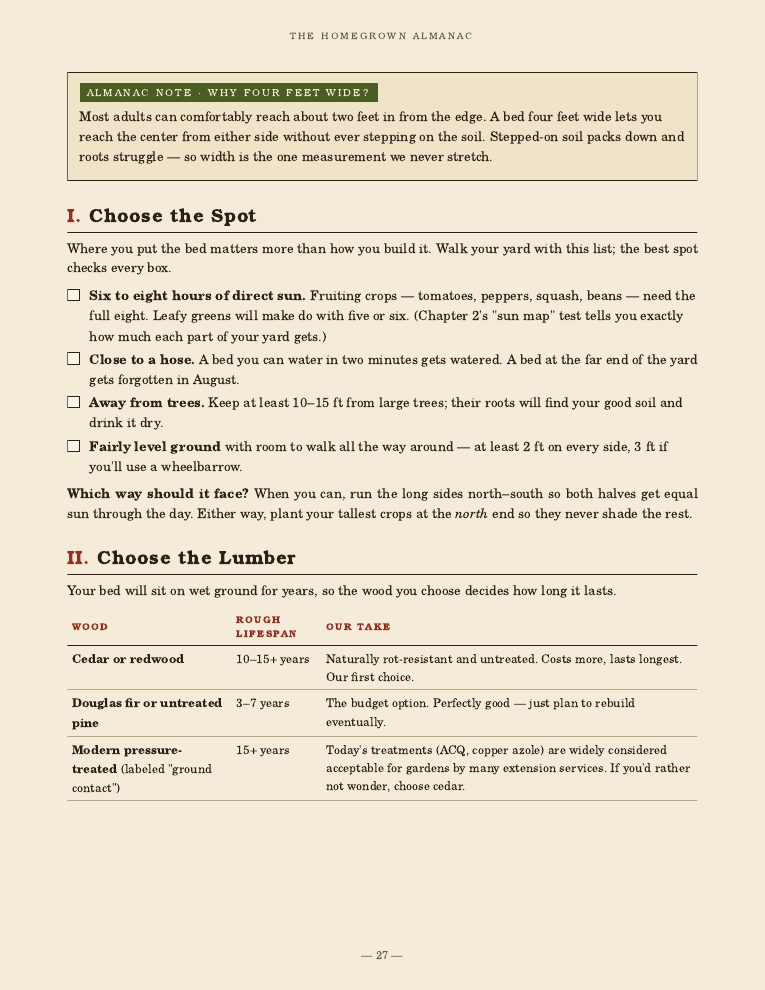
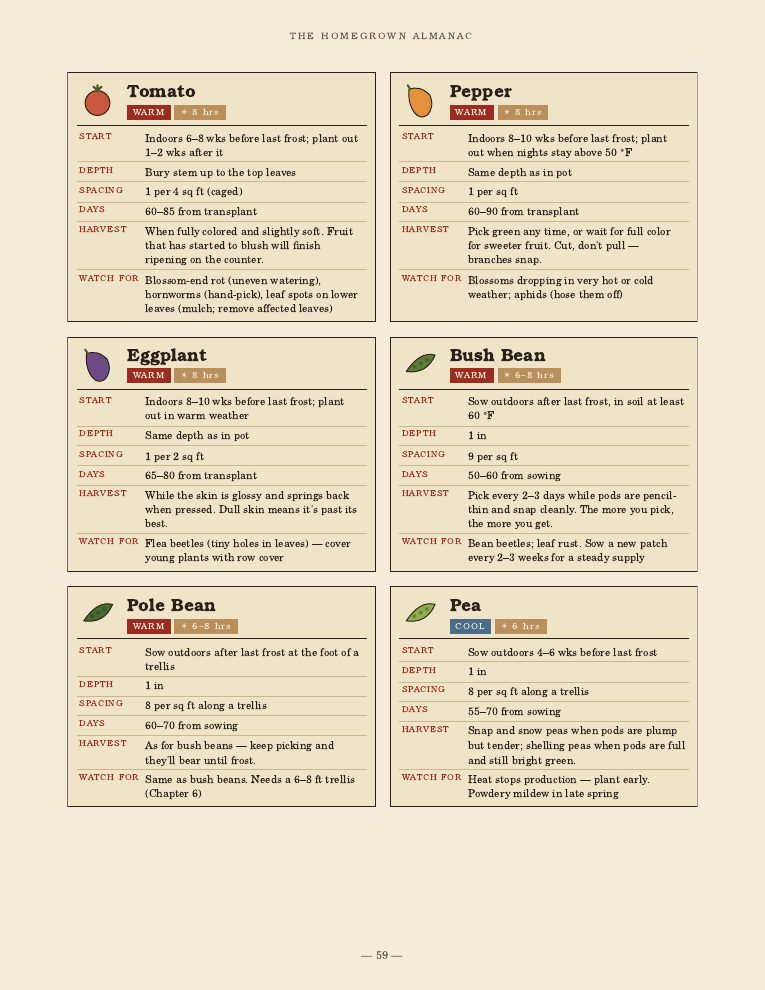
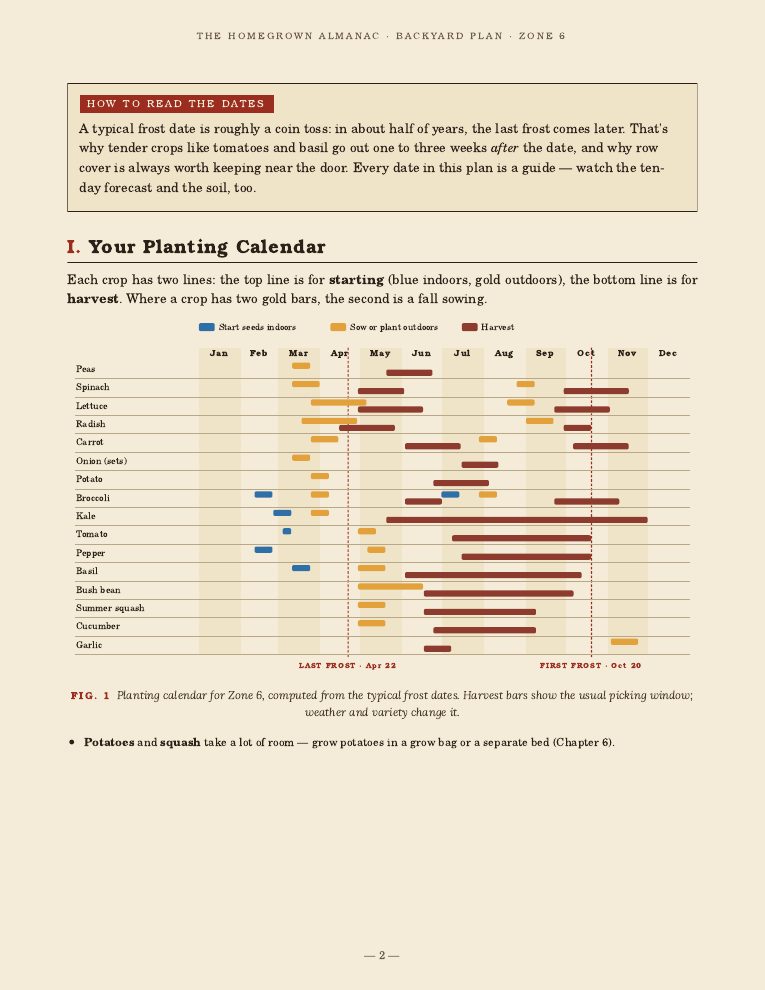
Included · Your Backyard Plan
Know exactly what to plant — and when
Most garden books give one calendar for the whole country. Spring in Georgia comes two months before spring in Minnesota, so that calendar is wrong for most people.
Your Backyard Plan is built for your zone. It shows, week by week, when to start seeds indoors, when to sow and plant outside, and when each crop is usually ready — plus a month-by-month checklist and a shopping list.
- Plans for Zones 3 through 10
- Warm-winter zones get an “upside-down” calendar that works with summer heat
Also included, free
Three printable bonuses
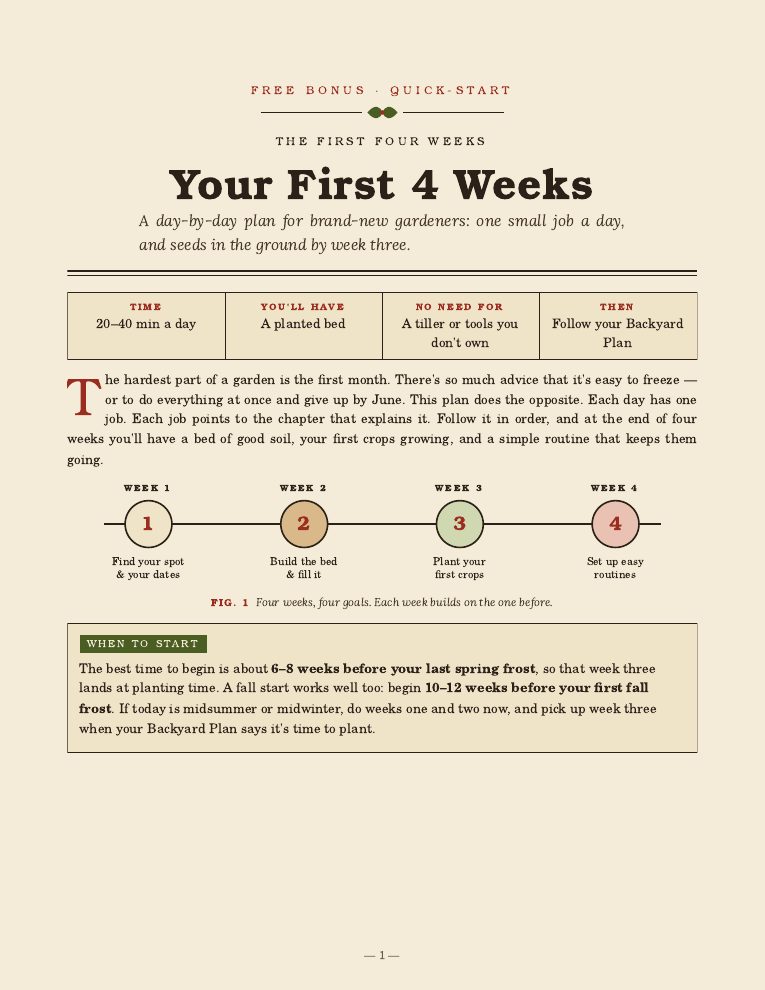
The First 4 Weeks
One small job a day. Seeds in the ground by week three.
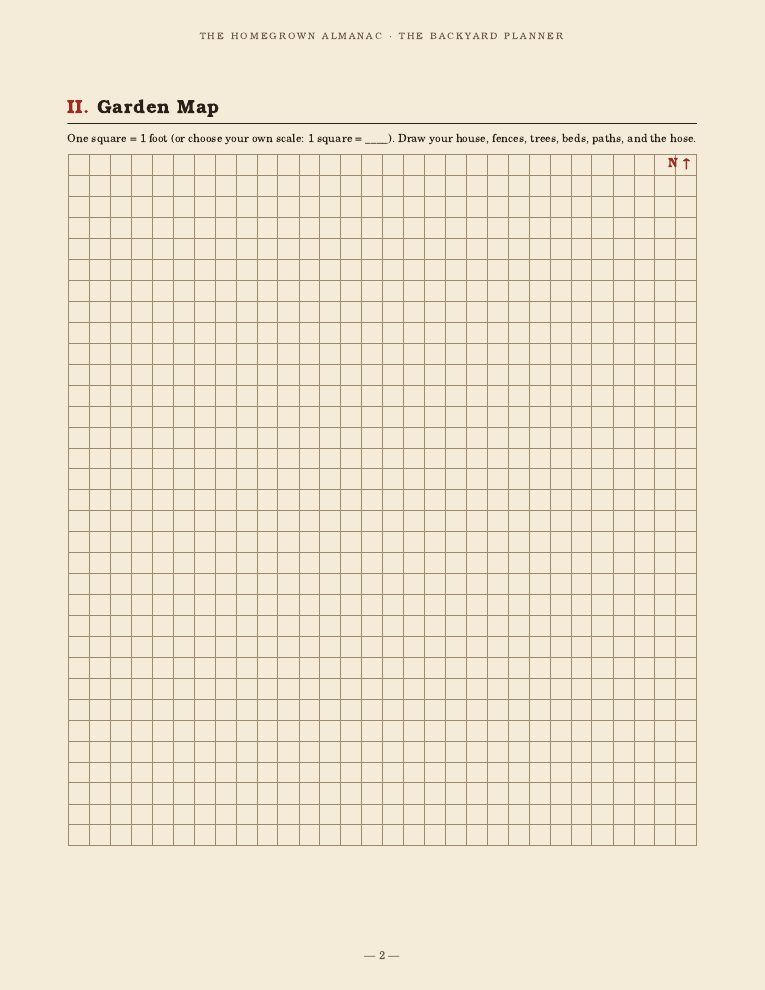
The Backyard Planner
14 pages: garden map, bed plans, seed and harvest logs, monthly planner.
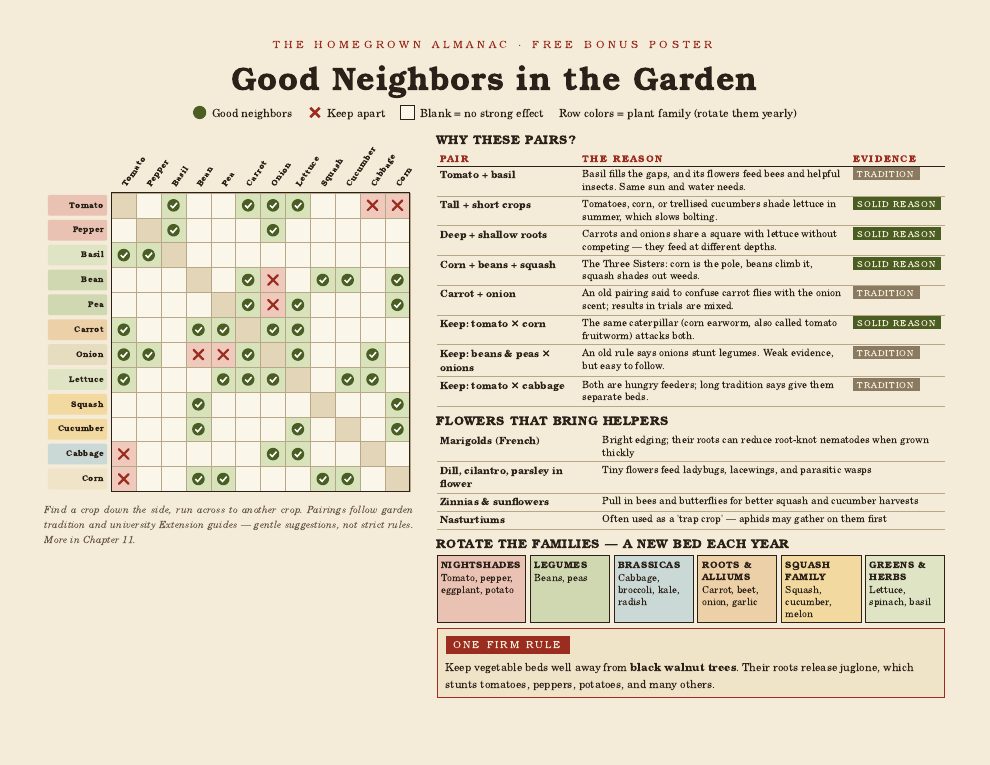
The Good Neighbor Chart
Which crops grow well together — and honest notes on which pairings are science and which are tradition.
Is it right for you?
Yes, if you…
- Want fresh vegetables from a small yard, patio, or a single bed
- Are starting out, or starting over after a few disappointing seasons
- Like clear steps and pictures more than jargon
- Would enjoy a project to share with family, grandkids included
Probably not, if you…
- Already run a market garden or a large homestead
- Want a video course (this is a printable book)
- Live outside Zones 3–10, or outside the U.S. climate zones
- Expect a garden to replace all your grocery shopping
Everything you get today
The Homegrown Almanac
| The Homegrown Almanac — 20 illustrated chapters (PDF) | Included |
| Your Backyard Plan — the week-by-week calendar for your zone (3–10) | Included |
| The First 4 Weeks — the first month, decided for you | Free |
| The Backyard Planner — printables to plan it, write it down, repeat it | Free |
| The Good Neighbor Chart — what to plant together, what to keep apart | Free |
One-time payment · No subscription
Yes — Send Me The AlmanacInstant download to your emailRead it on any phone, tablet, or computer, or print it at home.
A plain, simple guarantee
Read it, try it, plant something. If you don’t feel it was worth it, ask for a refund within 30 days and you’ll get every cent back. No forms, no hard feelings.
Questions, answered
What exactly is the Frost-to-Frost Method?
It’s how this almanac is built, not a gadget or a secret. Your growing year is bracketed by two days: your last spring frost and your first fall frost. Every date in your Backyard Plan is counted outward from those two — when to start seeds indoors, when to plant outside, when to pick — instead of from one national calendar that fits almost nobody.
Is this a physical book?
No — it’s a digital book (PDF) you download right after purchase. Many readers print it at home or at a local print shop and keep it in a binder.
I’ve never gardened. Is it too advanced?
It was written for beginners. The bonus “The First 4 Weeks” gives you one small job a day, and every chapter points you to the next step.
I only have a patio or a small yard.
That’s fine. There are full chapters on containers, vertical growing, and a single 4×8 bed — plus a chapter that shows how much food fits in the space you have.
How do I know my zone?
Look up your ZIP code on the free USDA Plant Hardiness Zone Map. Your plan also shows you how to use your own local frost dates.
Can I read it on my phone or tablet?
Yes. The PDF opens on any phone, tablet, or computer. The text is set large and clear, and you can zoom in on any diagram.
What if I’m not happy with it?
You’re covered by the 30-day money-back guarantee. Just ask for a refund within 30 days of purchase.
This season, grow something you’re proud of.
One good bed. One clear plan. And food you grew yourself.
Get The Almanac — $3730-day money-back guarantee